

The Feelings Wheel is suitable for primary school children and some younger kids. Not all children are great at self-identifying their internal experience. Learning to do so is part of learning emotional self-regulation. When children are able to name what they’re feeling, they can better calm themselves with the right tools, identify their triggers, communicate, and find solutions.
Educators and parents may find that asking children to hide, minimise, or ignore their own feelings may bring convenience and “peace” in the short term. But in the long term, a lack of empathy, resentment, avoidance behaviors, or explosive emotions may result when emotional denial becomes habit. A child’s self-trust, confidence, emotional maturity, and self-regulation come from being able to name what they are experiencing in their brain and body. The younger they are, the more help they need managing their emotions.
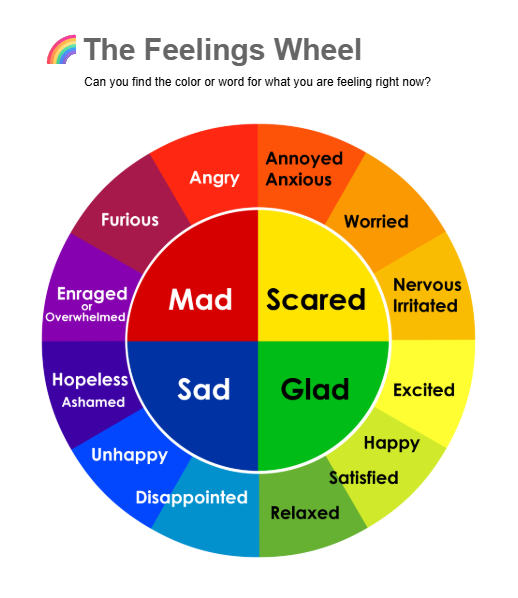
Emotions are a way our minds and bodies communicate. Naming the emotions is a method of self-understanding and self-care. Being able to recognise emotions in others is part of empathy and developing social awareness.
This Feelings Wheel is offered free to all, but the accompanying PDFs such as Feelings & Strategies and How Big is the Problem? are for counselling clients only. Please ask for the password through WhatsApp (tap the icon at bottom right of this page) or at your next counselling session!
Recommendations
This wheel works best when laminated and when a child can use erasable markers or clothes-pins to indicate the emotions they’ve felt.
When they are ready to reflect, ask them what physical sensations and behaviors accompany the feelings they experience, such as “I use a loud voice,” “my heart beats fast,” or “my stomach feels painful”.
Ask if they’ve noticed how their difficult feelings tend to come about (ie. let them name their triggers) and how the feelings go away (for example: “I got an apology” or “I went away and did something else”).
Ask also if they’ve noticed what mood they may need to be in to listen closely, to learn, and to do difficult things.
Some children may notice patterns in their feelings related to people, places, or times of the day or the week. They can come up with strategies to manage their difficult feelings with an adult, and do this with the Feelings & Strategies worksheet.
Download Links
- The Feelings Wheel – Letter Size PDF (281kb – and American spelling of “color”)
- The Feelings Wheel – A4 Size PDF (280kb – and British spelling of “colour”)